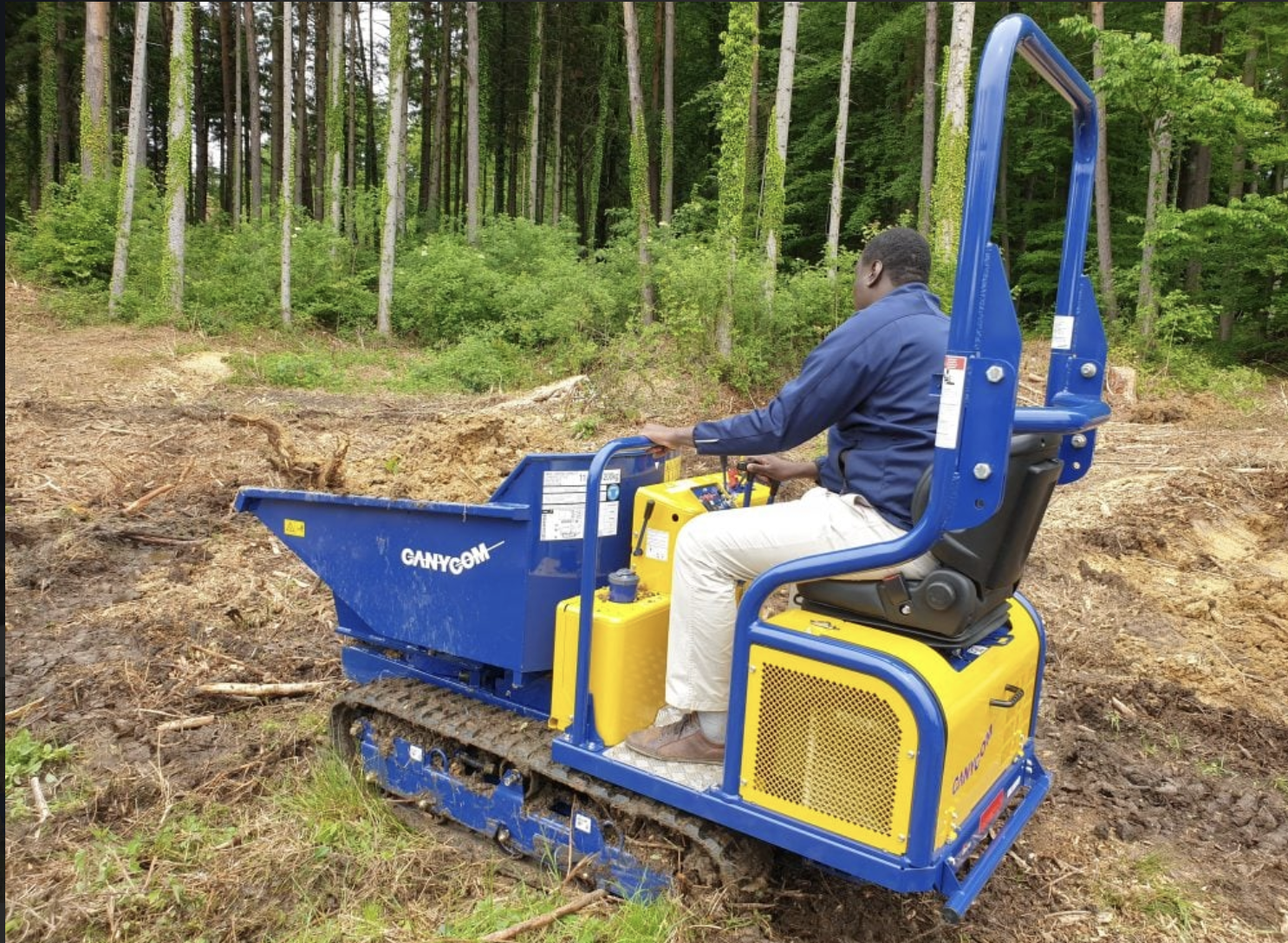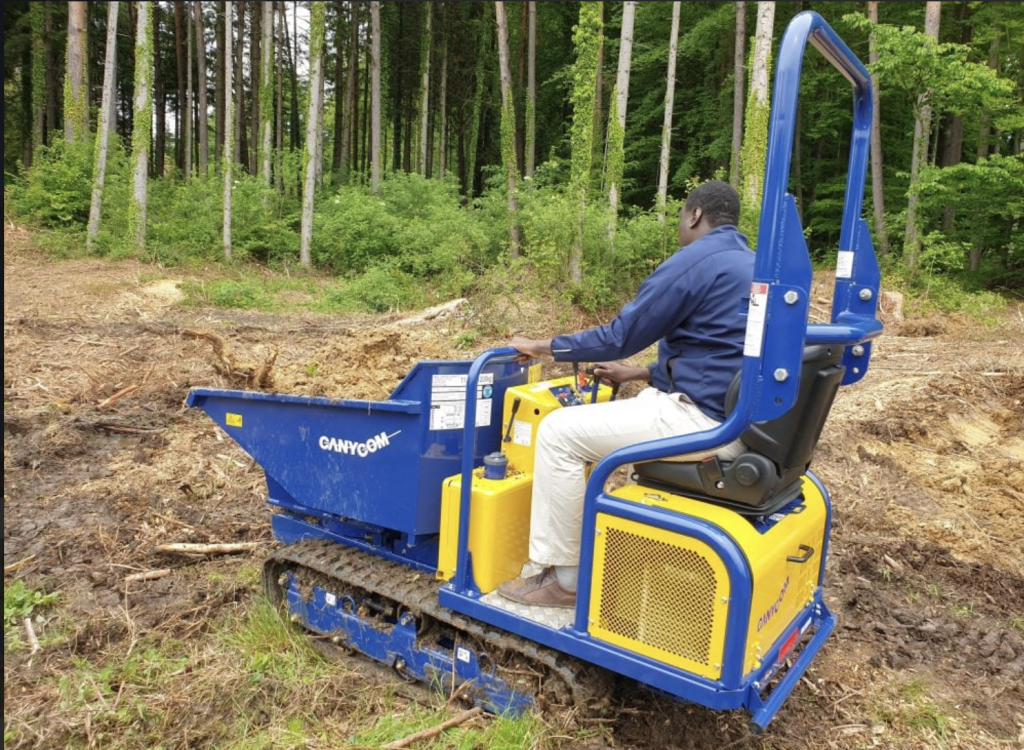
If you’ve never hired a track dumper before, you’ve probably just searched ‘dumper hire’ and assumed one machine is much like another. In fact, there are different types of dumpers and picking the wrong one can slow your job down, chew into your hire budget, or leave you stuck on a site you can’t manoeuvre. Fixed dumpers and swivel-track dumpers differ significantly in capacity and use. The key is choosing a machine suited to your site and job.
The basic difference
A fixed dumper has its skip bolted to the chassis. It tips forward or pivots in line with the direction the machine is facing. To dump somewhere else, you must turn the whole machine.
A swivel track dumper has a skip that rotates independently of the tracks, usually up to 180 degrees. That means the operator can dump to the side or rear without repositioning the tracks at all. This may sound like a small mechanical difference, but on-site it significantly impacts your efficiency.
Where a fixed skip dumper wins.
Fixed skips aren’t outdated; they’re still the better choice for many jobs. They are great for open sites with clear turning space, such as paddocks, acreage blocks and greenfield builds. If you have a repetitive point-to-point job, like shifting soil from an excavation to a single stockpile, a fixed skip dumper is ideal. These machines are also easier to operate and generally come at a lower hire rate.
If your site has room to turn and you’re doing the same run on repeat, there’s no need to pay more for a feature you won’t use.
Where a swivel dumper earns its keep
Swivel dumpers are built for sites where space, obstacles, or ground conditions make repositioning a hassle. They really come into their own where access is tight and on sites with obstacles such as pools, retaining walls, established gardens, and fences. Swivel dumpers cause less damage to the ground because the tracks stay put while the skip does the work – great if you are trying to protect a lawn, paved area, or driveway.
When deciding which machine is best, ask yourself these questions.
- How wide is the access? Under a metre, you’re likely looking at a swivel.
- How many dump points and direction changes does your job require? If it’s more than one or two, swivel starts paying for itself.
- Is the ground sensitive? If you are working on lawns, pavers or in a garden, the swivel reduces the damage.
- How experienced is the operator? Fixed skips are more forgiving for beginners.
- What’s the budget? If the site’s simple, don’t pay extra for manoeuvrability you don’t need.
If you’re unsure, have a chat with us. Send us a photo of your access point or describe your site, and we’ll recommend the right machine for the job, so you’re not paying for capability you don’t need, or stuck with a machine that can’t do the job.