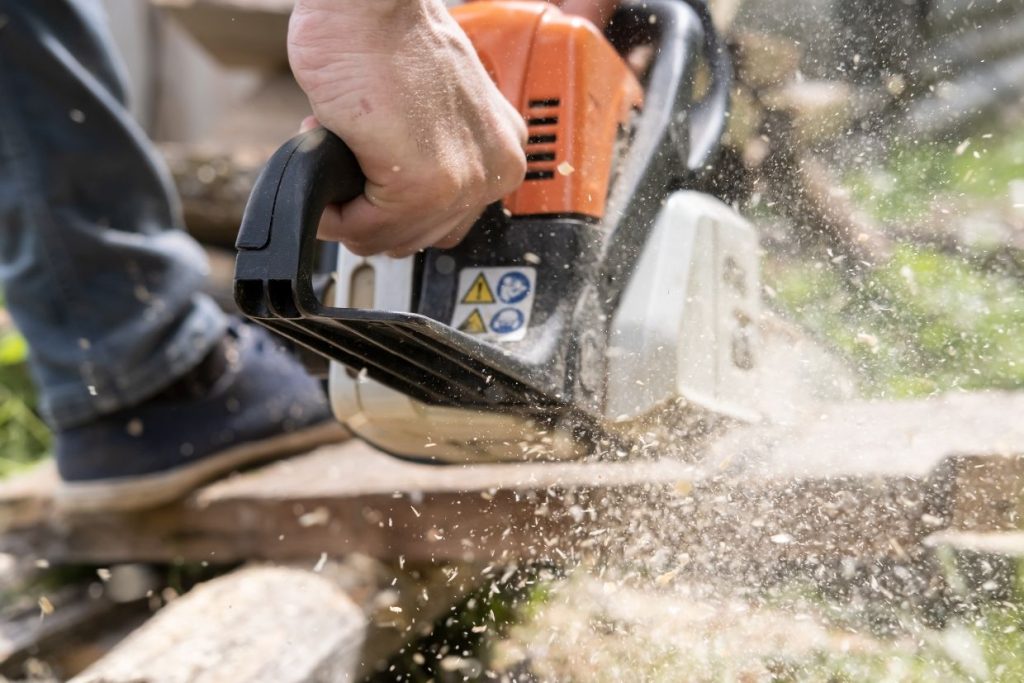
It pays to brush up on your safety knowledge before using a chainsaw. Here are our top tips.
Wear protective clothing
Common sense is a good place to start when choosing your clothing. Protect your head, eyes and hearing with a helmet, safety goggles and earmuffs. Gloves and cut-resistant legwear such as chainsaw pants and steel-capped boots with non-slip soles are also recommended.
Inspect the chainsaw
Check the chain tension and sharpness and make sure all the safety features are working properly. These include the chain break and throttle lock. Make sure there are no loose bolts or nuts.
Plan your cut
Clear the work area of any obstacles and make sure there is a safe path to retreat from any falling trees if you are felling. Make sure any bystanders and animals are within a safe distance from falling branches or trees.
Concentrate
Hold the chainsaw with both hands and keep a stable stance. Ensure your feet are shoulder-width apart for balance and be prepared for the force of the chainsaw as you start it and begin cutting. Don’t work in poor light or if you are tired.
Manage re-active forces
If the nose or tip of the chainsaw bar touches an object it can create kick-back. Pull-in and pushback can also occur depending which part of the blade is being used. Be aware of how the saw will react when contacting the material.
Don’t cut above shoulder height
Cutting above shoulder height increases the risk of loss of control and kickback. NEVER operate a chainsaw without having both feet firmly on the ground. For taller limbs use a pole pruner to cut and trim from the safety of the ground.
When you are finished
To bring the chainsaw to a halt after making your final cut, release the trigger and activate the chain brake. Always allow the saw chain to fully stop rotating after releasing the trigger. Clean your equipment and inspect it for any damage and store safely out of reach of children.