When people hire a machine for earthworks, they often hire one and ask it to do everything. It digs, then it carries, then it spreads, one job at a time. The machine spends most of the day doing things it isn’t best at, and you pay for every hour of it.
There’s a faster way. Split the job into three stages and put the right machine on each one.
Stage 1: Dig
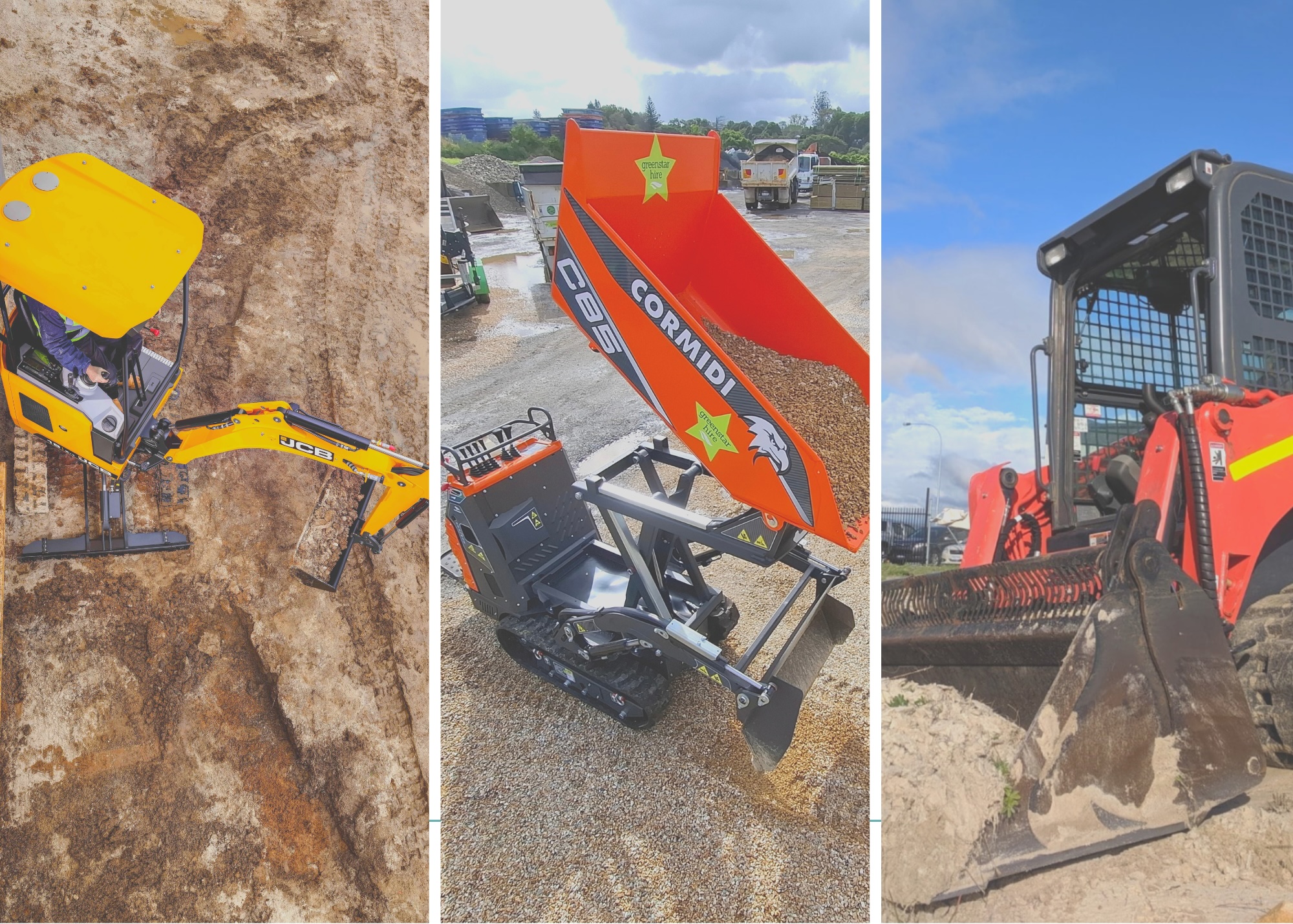
JCB 1.8t excavator
This is where the job starts. A mini excavator is the best tool for trenches, footings, drainage lines, stump removal and shaping a pad. It’s precise, it’s quick, and it can work in tight spots where a bigger machine won’t fit.
Because ours comes on a trailer, you can have it on site without organising a transport truck. That saves you time and money before the first bucket of dirt is even moved.
Stage 2: Haul
Self-loading mini dumper or swivel dumper
Every bucket of soil the excavator digs must go somewhere. Without a dedicated carrier, the excavator has to stop to move spoil, or you’re stuck with wheelbarrows.
With a self-loading mini dumper, one person can scoop and carry a load alone. It’s great for smaller jobs or solo work. A swivel dumper tips the load wherever you need it, even over a trench or a retaining wall. It’s handy when access is tight, or the drop-off point is awkward.
Either way, the excavator keeps digging, and the dirt keeps moving, with nobody standing around waiting.
Stage 3: Spread and level
Compact track loader with pozzie tracks
Once the material is where you want it, the compact track loader moves it around and tidies it up. It spreads fill, levels a pad, grades a driveway base and cleans up the site.
Pozzie tracks spread the machine’s weight over a wider area, which really matters in the Northern Rivers. They give better grip on slopes and soft ground, and they’re gentler on lawns and established driveways than wheels.
And, if the ground is wet and you want to protect it further, we also recommend hiring some ground protection bog mats.
Why this beats one big machine
Hiring a combo of machines is more efficient. There’s no idle time. While one machine digs, another is hauling, and another is spreading. Having the right-sized machine for each job makes sense. You don’t pay for the capacity of a large machine on a residential block. Your job will get done faster too. Overlapping the stages shortens the job, so you can hire for fewer days.
What it looks like on a real job
Take a small shed pad or a drainage run on a sloping block. The excavator cuts the trench or excavates the pad. The dumper takes the spoil to wherever it’s needed, whether that’s a low spot or a spoil pile. The track loader spreads and levels the material, then tidies up when the work is done.
Instead of one machine doing three jobs back-to-back, three machines overlap, and the job is wrapped up in a fraction of the time.
A few tips before you hire
- Call Dial Before You Dig on 1100. This service tells you whether underground utilities such as gas, electricity, water, sewer and telecommunications cables are near your dig site and puts you in touch with the asset owners so they can send you plans of what’s buried there. Hitting a buried cable or gas line is dangerous and expensive.
- Check your gate and access widths.
- Decide where the spoil is going before you start.
- Watch the weather. Wet ground and heavy rain change how a day goes.
- Not sure which combination suits your job? Give us a call, and we’ll help you work it out.
Ready to get started? Call us on 02 6788 1234 or book online.